
Reviewed · TICKETS
Tavira Ciência Viva Science Center Individual Ticket
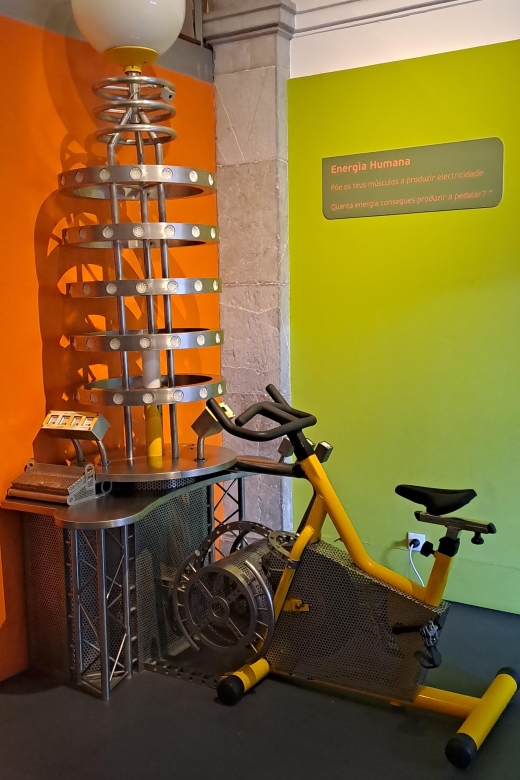
Tavira Ciência Viva is interesting because it turns science into a do-it-yourself circuit, then gives you a fresh way to repeat the ideas before you leave. I especially like the bike-powered energy challenge, since you feel renewable power in your legs, not just in your head.
You’ll also explore the Water and Energy area and build landscapes with the sandbox. One consideration: the whole visit is 90 minutes, so if you want lots of slow, quiet looking, you may wish you had more time.
Key highlights
- Bike-powered energy that turns renewable power into an active experiment
- Water-cycle learning with hands-on ways to understand how it moves
- Sandbox challenges where you shape mountains and rivers and see cause and effect
- Math puzzle stations that make problem-solving physical, not abstract
- Sound physics experiments that help you connect what you hear to what you test
- A chemistry show that acts like a high-energy finale
Getting Oriented Near the Igreja do Carmo in Tavira
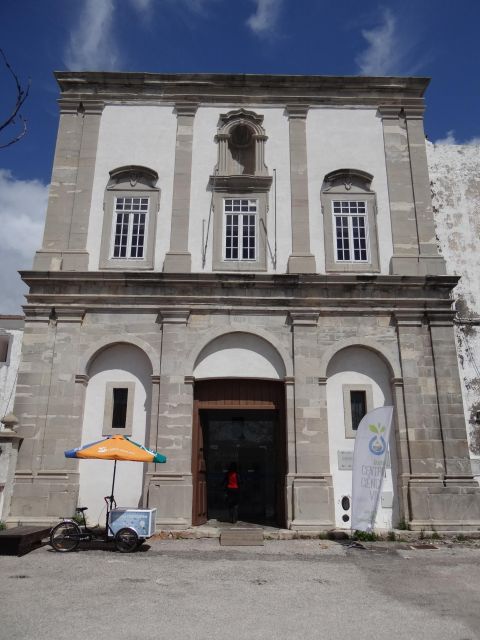
Your visit starts at a simple, local-feeling meeting point close to the Church of Carmo in Tavira. That matters more than it sounds, because it helps you spend energy on the experience, not on figuring out where to go in an unfamiliar town.
The center keeps the group size small, limited to 10 participants. That usually means you get more instructor attention during the hands-on parts, and you spend less time waiting your turn.
A few more Tavira & Olhão trips worth putting side by side
- Tavira: Olive Factory Tour and Tasting
★ 4.8 · 272 reviews - Olhão: 3 Islands Guided Sightseeing Tour with Lunch
★ 4.7 · 172 reviews - Olhão: Dolphin Observation
★ 4.1 · 127 reviews
What the Do, Learn Permanent Exhibition Feels Like in Real Life
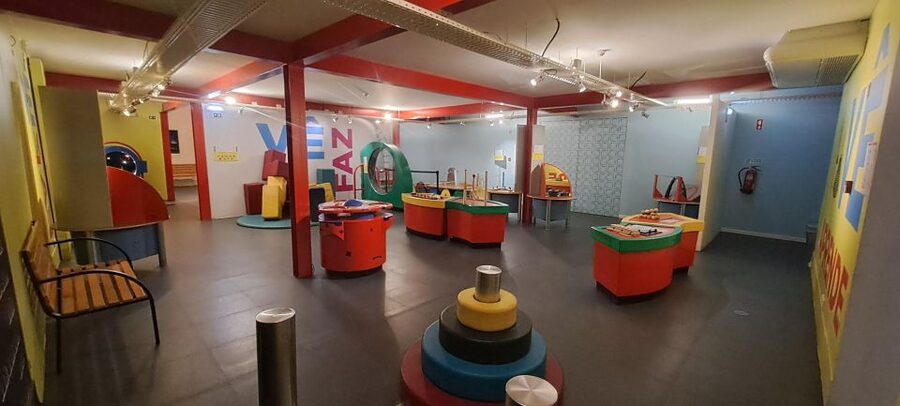
The permanent exhibition is built around a repeatable idea: you do an activity, you learn from what you observe, then you circle back with a new way of approaching it. The goal is not just to watch science happen, it’s to understand why it happens.
You can expect three challenge areas, each with a slightly different learning style. The same science themes keep returning, which is great when you want the concepts to stick.
See, Do and Learn Math Challenges You Can Work Through
In the See, Do and Learn zone, the focus shifts to mathematical challenges. This is where the experience turns problem-solving into something you can manipulate, not just something you read.
What I like about this approach is that it lowers the stress. Even if math is not your favorite subject, you can still participate because the station is designed for interaction: you try something, you see what it produces, then you adjust.
You might find this portion works especially well for families, since kids can often jump in first, then adults get pulled along once the puzzle logic becomes clear.
Listen, Do and Learn Physics of Sound
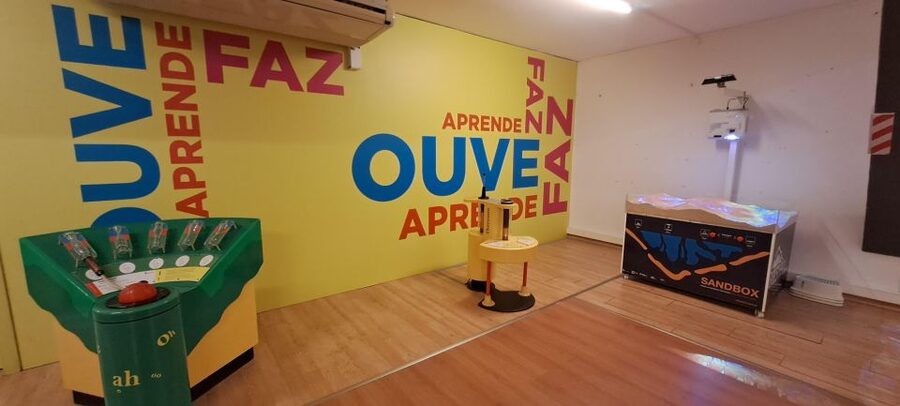
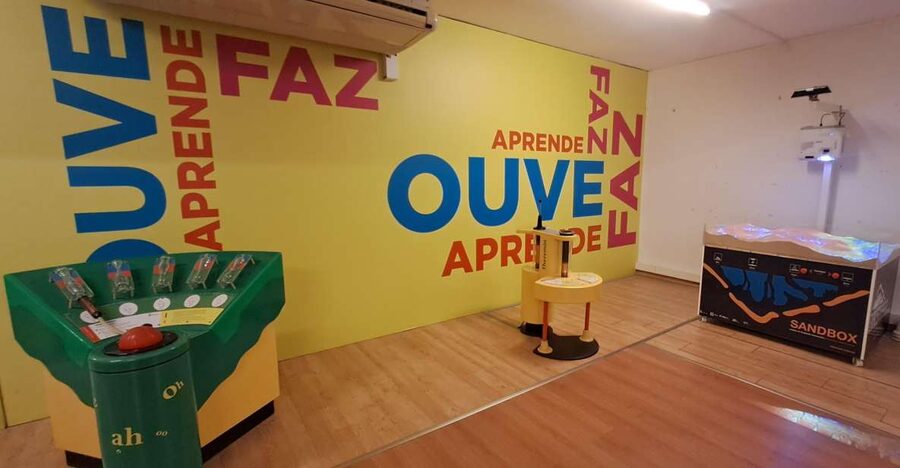
Next comes Listen, Do and Learn, where the physics of sound takes center stage. Expect experiments that connect what you hear to what you can test, so sound becomes measurable and less mysterious.
This section is also a smart break from visual-only learning. Sound is invisible, so making it part of a hands-on activity helps you build an internal model faster than by explanation alone.
If you like science that you can feel in the room, this part tends to deliver. It also pairs nicely with the earlier math zone, since both are about patterns and cause-and-effect.
Same stretch of coast, a different sort of day out:
- From Faro: 7 Valleys Hiking, Benagil Cave, & Snorkeling Tour
★ 4.9 · 123 reviews - Olhão: Ria Formosa 2 Islands Boat Tour
★ 4.9 · 38 reviews - Olhão- Safari Watching Dolphins and other species
★ 4.9 · 29 reviews - Olhão: Art Mosaic 2 hours Workshop by MosaicOlhão
★ 5.0 · 20 reviews
Water Cycle Learning, Sandbox Mountains, and Bike-Powered Energy
The Water and Energy area is where the experience gets especially physical. You’ll explore the water cycle and work with activities that turn the idea of movement and change into something you can shape.
One of the most memorable hands-on pieces here is the sandbox. You create mountains and rivers, and you get to see how your choices affect the flow of water ideas. It’s a simple setup, but it makes the abstract feel practical.
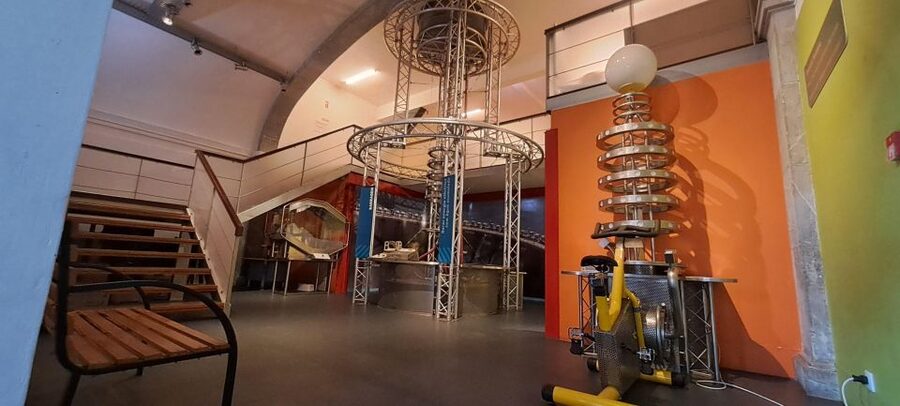
Then there’s the bicycle energy challenge, a highlight for many people because it links effort to output. You try to produce energy using a special bike setup, which makes renewable energy feel more real than a diagram ever could.
This combination of water movement plus energy production is also a good learning pairing. You’re not just learning facts. You’re building links between systems, water processes, and power sources.
The Laboratory Finale Chemistry Show That Ends Strong
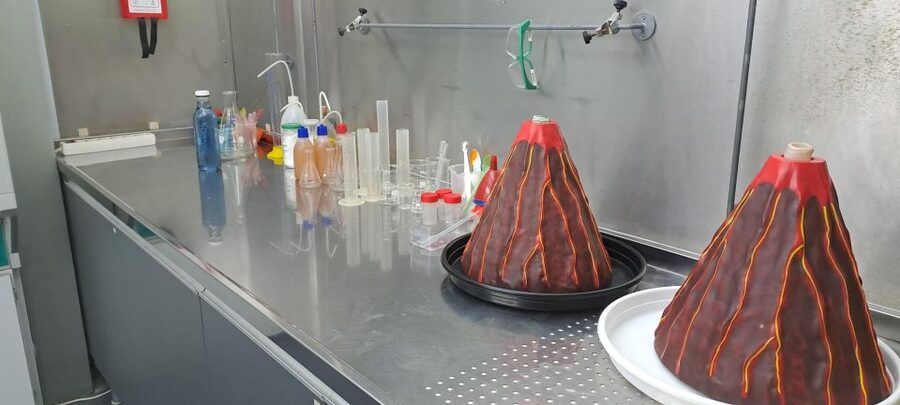
When you think you’re finished, the center adds a last surprise: a chemistry show in the laboratory. This is the kind of finale that changes the mood of the whole visit, because it’s a shift from you actively doing to you watching science in motion.
I like this structure. Hands-on stations can sometimes blur together when you’re hopping between activities. A show gives your brain a reset and gives everyone a shared moment to end on.
It also helps younger visitors stay engaged through the last stretch, since the lab moment is short, dramatic, and different from the other stations.
Small Group Dynamics and Instructor Support
Your group is limited to 10 participants, and that small size shows up in the experience style. The instructor can guide you through activities without turning the visit into a lecture.
Language coverage is another plus. The instructor speaks English, Spanish, Portuguese, and French, so many visitors can ask questions without switching to a second language.
One booking noted quality time with an instructor named John during the visit, including a behind-the-scenes feel. That lines up with what you want from a science center, clear guidance, and enough interaction that questions don’t get lost.
Staff politeness and active engagement also come up strongly in the positive feedback. If you’re hoping for a visit that feels friendly and structured, this is the right model.
Price and Time: Is $8 Worth a 90-Minute Science Session?
At about $8 per person for a 90-minute experience, this is strong value in the Algarve. You’re not just paying for entry to a static museum space, you’re paying for facilitated, interactive learning plus the chemistry show.
The time frame is a big part of the value story. Ninety minutes is long enough to try multiple challenge areas, but short enough that you don’t need a full half-day schedule. It’s also a realistic length for kids, where attention can drop off if you try to stretch an activity too far.
Is there a downside? The only real trade-off is that you can’t do everything at a leisurely pace. If you love repeating experiments again and again, you may wish the visit lasted longer. But if you want variety and momentum, the timing is a win.
Practical Rules That Matter Once You Arrive
A good visit starts with knowing what’s allowed, so you can avoid last-minute friction.
Pets are not allowed, with an important exception for assistance dogs. Swimwear is not allowed, and smoking indoors is not allowed.
These rules are worth noting because a science center often involves movement, hands-on surfaces, and lab spaces. Following the guidelines keeps the experience smoother for everyone.
Who Should Book This Science Center Ticket
This ticket fits best if you like learning by doing. Families often love it because it works for kids and parents at the same time, with activities that don’t treat adults like passengers.
Adults also enjoy it if you want hands-on science without needing advanced background. The math puzzles and sound experiments reward curiosity, not prior schooling.
If you’re traveling with limited time in Tavira or want a focused indoor activity that still feels active, this is a smart choice. It’s also a good way to slow down your Algarve trip without committing to a full day.
Should You Book the Tavira Ciência Viva Individual Ticket?
I’d book it if you want a short, structured, hands-on science experience with multiple themes. The mix of water cycle learning, math challenges, sound physics experiments, and the lab chemistry show gives you variety in one visit.
I’d skip it only if you want a quiet museum experience where you can browse at your own pace for hours. This is designed for interaction and guided participation, so you’ll get the most out of it if you’re happy to try, test, and move along.
If you’re on the fence, the easiest way to decide is simple: if your group enjoys interactive science and you can spare 90 minutes, this ticket is a solid value.
FAQ
How long is the Tavira Ciência Viva Individual Ticket experience?
The experience lasts 90 minutes.
How much is the ticket?
The ticket price is $8 per person.
Where is the meeting point for the tour?
The center is located close to the Church of Carmo in Tavira.
What languages does the instructor speak?
The instructor speaks English, Spanish, Portuguese, and French.
Is the visit wheelchair accessible, and how big is the group?
Yes, it is wheelchair accessible. The group is small, limited to 10 participants.
What is not allowed during the visit?
Pets are not allowed (assistance dogs are allowed). Swimwear is not allowed, and smoking indoors is not allowed.
Can I cancel or change plans after booking?
Yes, you can cancel up to 24 hours in advance for a full refund. You can also reserve now and pay later to keep plans flexible.
Recently added around Tavira & Olhão
- Tavira: Passeio Half Day★ 5.0 · 5 reviews
- Tavira City & Ice Cream★ 4.8 · 4 reviews
- Half-day Private Sailing Yacht Experience in Tavira★ 5.0 · 3 reviews
- Passeio de barco na Ria Formosa 3H★ 4.3 · 3 reviews
- Olhão:5h ride 3 stops on the beaches and islands Ria Formosa★ 4.7 · 6 reviews
- Passeio Barco na Ria Formosa 5H★ 5.0 · 3 reviews
- Olhão- Safari Watching Dolphins and other species★ 4.9 · 29 reviews
- Olhão: Ria Formosa Tour★ 5.0 · 6 reviews
Tickets, side by side.

Algarve Zoomarine Ticket and Dolphin Emotions Experience
Read our review →
Browse the lists this tour appears in